

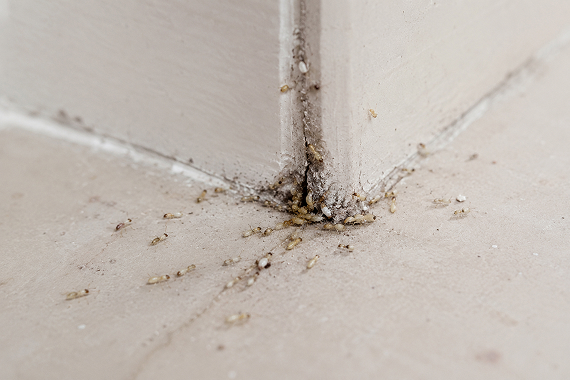
Spotted pale, crawling insects in your home and wondering whether you have white ants or termites? Here is the short answer: they are the same pest. In Australia, “white ants” is simply a common nickname for termites, and both terms describe one of the most destructive insects a homeowner can encounter.
Knowing what you are looking at and recognising the early warning signs can make an enormous difference to the outcome. Termites can cause serious structural damage long before visible signs appear, and the cost of repairs often runs into thousands of dollars. This guide covers how to identify white ants (termites), the signs of termites in a house, and what Geelong homeowners should do if they suspect activity on their property.
White ants vs termites: are they actually different?
No. White ants and termites are the same insect. The nickname “white ant” became widespread in Australia because worker termites are pale or creamy white in colour and move in large numbers, much like ants do. However, termites are not related to ants at all. Scientifically, they are far more closely related to cockroaches than to any ant species.
This matters practically because termites and ants require completely different management approaches. Misidentifying termites as ants can delay professional assessment, allowing the activity to spread undetected through a structure.
How are white ants (termites) different from regular ants?
At a quick glance, termites and ants can look similar, especially in low light or when you only see them briefly. However, there are several reliable physical differences you can look for.
Antennae shape
Termites have straight, bead-like antennae. All species of ants have elbowed or bent antennae with a distinct angle, almost like a bent elbow.
Body shape and waist
This is one of the clearest differences. Ants have a narrow, pinched waist between the thorax and abdomen. Termites have a thick, broad, uniform body with no obvious waist.
Wing size (on swarmers)
Both termites and ants produce winged reproductive insects at certain times of year. Termite swarmers have two pairs of wings that are almost identical in size. Ant swarmers have larger front wings and noticeably smaller hind wings.
Colour
Worker termites are typically pale, creamy white, or very light brown. Regular ants tend to be much darker, ranging from black to dark brown or reddish tones.
Eyes
Worker and soldier termites are generally blind. Ants have clearly visible eyes on the sides of their heads.
If you spot pale insects inside your home and are unsure what you are looking at, do not disturb them. Take a photo if possible, note where you found them, and call a licensed pest technician for a proper assessment.
Signs of termites in your house: what to look for
Termites are often called “silent destroyers” because they can remain hidden inside wall cavities, flooring, and structural timbers for months before visible damage appears. Learning the signs of termites in a house gives you the best chance of catching activity before it causes serious harm.
Mud tubes on walls or foundations
Subterranean termites build narrow shelter tubes from soil, mud, and their own secretions. These tunnels allow termites to travel between the nest and a food source while avoiding light and open air. You may spot them running along external walls, around the perimeter of the foundation, beneath the floor joists, or along internal skirting boards.
Hollow-sounding timber
Termites feed on timber from the inside out, leaving a thin outer shell that looks intact but is completely hollow beneath. Tap wooden beams, door frames, skirting boards, or wall panels. A dull, papery, or drum-like sound rather than a firm, solid knock is a strong indicator of termite activity within the timber.
Frass (termite droppings)
Drywood termites produce small, granular droppings called frass. These resemble fine sawdust or tiny grains of sand and often appear in small piles near the bases of timber structures, on window sills, or around door architraves. Finding frass is a clear sign that a professional inspection is needed without delay.
Discarded wings near windows and doors
When a termite colony matures, it releases winged reproductive insects called alates or swarmers, which fly out to start new colonies. After landing, they shed their wings immediately. Piles of small, translucent wings near windowsills, doors, light fittings, or on the floor suggest that a swarm has occurred nearby, which may mean an active colony is present in or around your home.
Doors or windows that stick or no longer open smoothly
As termites work through timber frames and door jambs, the timber can warp slightly, making previously easy-to-operate doors and windows harder to use. While this can also indicate moisture issues, both possibilities warrant professional attention.
Clicking or rustling sounds from the walls
Soldier termites produce a faint clicking sound by banging their heads against tunnel walls to signal danger to the colony. If you press your ear against a wall and hear a subtle crackling or rustling sound, particularly at night when the house is quiet, this may indicate active termite movement within the wall cavity.
Bubbling or peeling paint
Paint that blisters, bubbles, or peels away from a surface without an obvious moisture source can sometimes indicate termite activity beneath the surface. Termites produce small amounts of humidity as they work through timber, which can push against surface finishes from below.
Where do termites hide in a Geelong home?
Subterranean termites nest underground and enter buildings through the soil. In Geelong homes, the most common entry points and hiding spots include:
- Subfloor areas and crawl spaces, particularly in older homes with suspended timber floors
- Wall cavities and internal framing, where termites can move from the floor level up through the entire structure
- Around door frames, window architraves, and any area with higher moisture levels
- Roof voids, especially where there has been water ingress
- Garden timbers, sleepers, and retaining walls close to the home’s perimeter
- Tree stumps or fallen timber within a few metres of the structure
Why are Geelong homes at higher risk?
The Greater Geelong region is considered a moderate- to high-risk area for termite activity, and several local conditions contribute to this.
Climate and moisture
Geelong experiences warm summers with periods of elevated humidity, particularly in areas closer to the Barwon River and Corio Bay coastline. Subterranean termites are most active in warm, moist soil conditions, and their swarming season in Victoria typically runs from late spring through to autumn.
Older housing stock
Suburbs, including Newtown, Geelong West, Belmont, and Manifold Heights, contain a significant proportion of homes built before the current termite management requirements came into effect. These properties often feature ageing timber subfloors, mature garden trees, and conditions where termite activity can establish itself without obvious signs.
Garden landscaping
Timber retaining walls, mulch placed directly against the home’s perimeter, firewood stored close to the structure, and old tree stumps in the garden all increase the likelihood that termites will find their way toward the building.
Annual termite inspections are strongly advised for all Geelong homeowners, in line with Australian Standard AS 3660, which governs the management of subterranean termites in and around structures. Staying on an annual inspection schedule, especially in older suburbs or on larger properties with established gardens, helps reduce the chance of termite damage going undetected.
What should you do if you find termites?
If you discover what you believe to be termites in your home, leave them undisturbed. This is the most important step. Termites that are disturbed will retreat quickly and deeply into the structure, making professional management far more difficult.
Avoid the following until you have spoken with a licensed technician:
- Spraying with any insecticide, fly spray, or DIY pest product
- Breaking open the mud tube or damaged timber to investigate further
- Flooding the area with water
- Applying paint, filler, or sealant over visible damage
Instead, take a photograph of what you have found and note the exact location as precisely as you can. Then call a licensed termite specialist as soon as possible. The faster a professional assessment is carried out, the better the chance of lowering the risk of further activity taking hold before management begins.
Geelong Pest Control can be reached on 1300 135 519.
Termite inspections in Geelong: what to expect
A professional termite inspection is a thorough, non-destructive assessment of the structure and surrounding property. Licensed technicians use tools including moisture metres, thermal imaging cameras, and radar detection devices to locate activity in areas that are not visible to the naked eye.
At Geelong Pest Control, all termite inspections are conducted in line with Australian Standard AS 3660. The inspection covers the interior, exterior, subfloor where accessible, roof void, and the surrounding grounds. After the inspection, you receive a detailed written report with photographs, clear findings, and practical recommendations.
Properties with prior activity, timber subfloors, or dense garden landscaping near the structure may benefit from assessments every six months rather than annually. A good termite inspector will explain the findings clearly and walk you through the next steps without any pressure.
Termite barrier and management options in Geelong
If an inspection identifies active termites or reveals conditions that leave a property vulnerable, there are two primary management approaches available to Geelong homeowners.
Chemical soil barriers
A chemical barrier involves applying a liquid termiticide to the soil around and beneath the structure. The product creates a zone in the ground that termites encounter while foraging. Chemical barriers installed to AS 3660 standards can remain effective for several years, though annual inspections remain important to confirm the integrity of the barrier has not been compromised by landscaping, construction work, or soil movement.
Baiting and monitoring systems
Baiting systems use in-ground monitoring stations placed at intervals around the property perimeter. When termites locate a station, a slow-acting bait is introduced. The termites carry the material back to the colony, which progressively reduces the population over time. Baiting systems require ongoing servicing and monitoring by a licensed technician to be effective.
For a termite inspection or quote on termite management services in Geelong, call Geelong Pest Control on 1300 135 519.
Frequently Asked Questions
Are white ants and termites the same pest?
Yes, white ants and termites are the same insect. “White ant” is a common Australian nickname for worker termites, based on their pale appearance. They are not related to ants at all, and managing them requires a completely different approach to ant control.
What are the first signs of termites in a house?
The most common early signs of termites in a house include mud tubes running along walls or foundations, hollow-sounding timber when tapped, small piles of granular frass near door frames or skirting boards, discarded wings found near windows or doors, and doors or windows that have recently become difficult to open or close. If you notice any of these signs, contact a licensed technician before disturbing the area.
Can I use hardware store products to manage termites myself?
DIY termite products are not advisable for active infestations. Disturbing termites with off-the-shelf sprays typically causes them to retreat deeper into the structure, making professional management significantly harder. Licensed technicians have access to commercial-grade products and detection technology unavailable to the general public, and they know how to apply them without driving activity deeper into the building.
How often should I get a termite inspection in Geelong?
Annual inspections are advised for most Geelong properties, in line with Australian Standard AS 3660. Homes with prior termite activity, timber subfloors, significant garden landscaping near the structure, or older construction may benefit from inspections every 6 months. Staying on a regular inspection schedule gives you the best opportunity to detect activity early and reduce the risk of structural damage.