

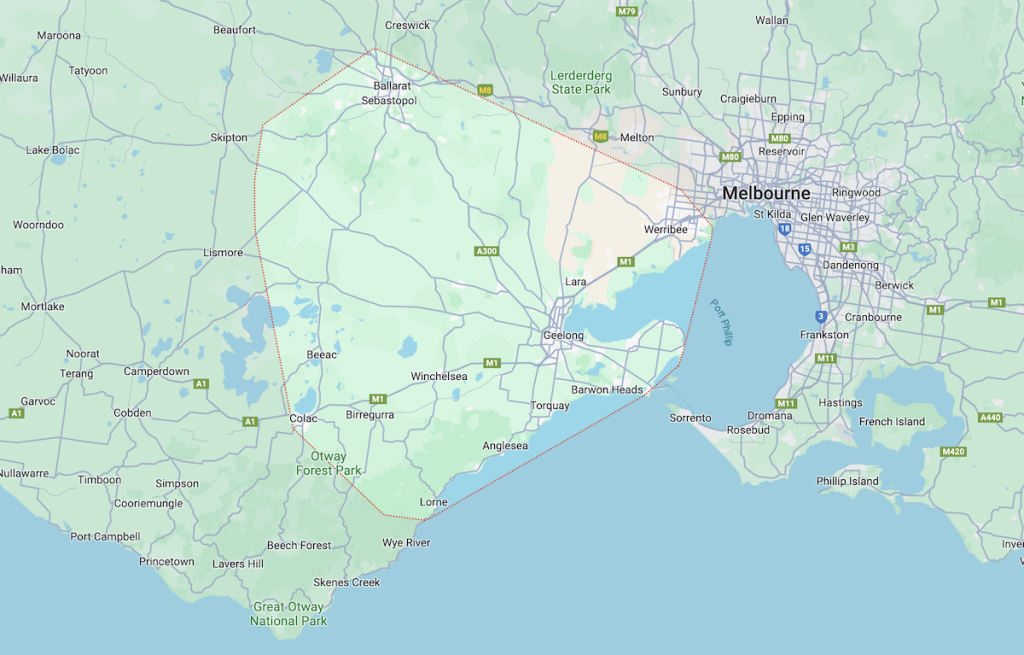
Termite Inspections Geelong, Surf Coast and surrounding Victoria
If you’re worried you have termites or want to book your annual termite inspection, please give Geelong Pest Control a call for a comprehensive termite inspection you can trust.
Inspecting a home for termites is not something that should be rushed!
At Geelong Pest Control we take time to inspection every room in turn, plus the roof, any sub-floor, any out-buildings and the yard. To supplement the skills of our inspectors, we also use the latest termite detection equipment (Termatrac).
If termites are in your house or yard, we will find them!
Call Geelong Pest Control for a Professional Termite Inspection
IMPORTANT – What should you do if you find termites?
- Don’t disturb them further (by breaking open areas of activity)
- Don’t spray them with insecticide.
- Call Geelong Pest Control immediately
Disturbing or spraying the termites won’t solve the problem and will often cause them to relocate to another (often hidden) part of the building. This means when we turn up to inspect, they can be hard to locate, therefore making it difficult to determine which species is present and fully map the infestation. As a result, it can make them more difficult to control.
Our Comprehensive Termite Inspection
All our termite inspections are carried out according to Australian Standards 3660.
The inspection is designed to determine if there are…
Active termites in the buildings or yard.
Any signs of termite activity or damage on the property.
Conditions around the house or yard that may make a termite attack more likely.
Building faults / issues that may create concealed termite entry points.
The output of the inspection is a multi-page report with photographs to present the findings of the inspection and importantly make a series of recommendations to fix any issues and propose a plan to provide the long-term protection of the property.
If active termites are found during the inspection, we will discuss termite treatment options and provide a termite treatment proposal and quote.
Termite Inspection FAQ
What areas of the property do we inspect?
- The outside perimeter of the house
- All interior rooms of your home (include the garage)
- Roof void
- Sub-floor (if you have one)
- Any outbuildings within 30m of the main building
- Areas of the yard within 30m of the main building, including trees, fencing and landscaping timbers
How long does a termite inspection take?
Our termite inspections typically take 2-2.5 hours. But this depends on the size of the house, whether it has any sub-floor, the number of out-buildings and the overall size of the property.
When deciding on a termite inspection company, asking how long a termite inspection will take allows you to compare services and pricing more accurately – a good termite inspector will take time (and needs time) to carry out a comprehensive termite inspection.
What termite detection equipment do we use?
At Geelong Pest Control, we use three pieces of equipment to supplement the skills of our inspectors:
- Donger or tapper – used to tap wood, with the sound giving clues as to whether the wood is sound or damaged.
- Moisture meter – will pick up moisture behind walls which could indicate leaks or termite activity.
- Termatrac termite detector – can pick up movement behind walls, such as termites.
How much does a termite inspection cost?
The cost of a termite inspection depends on the size of the house and property – larger houses have more rooms and so the inspection takes longer / costs more.
When you contact us for a quote, we will ask questions about the size of your house / property.
How often should you have a termite inspection?
Australian standards, Governments and Building Authorities recommend termite inspections at least once a year, but more often in areas of high termite pressure or for high-risk properties. For most homes in Victoria, annual termite inspections are sufficient.
If you have a termite protection system installed in or around your home, annual termite inspections will be required to maintain the warranty on the system.
Is a termite inspection the same as a pre-purchase pest inspection?
No, a termite inspection is very different to a pre-purchase pest inspection.
A termite inspection is a service booked by a homeowner for a property they own and is focused solely on subterranean termite activity and conditions likely to increase the risk of termite attack.
A pre-purchase pest inspection or more accurately a pre-purchase timber pest inspection is a service booked by a potential property buyer looking assess a property they are interested in purchasing. The inspection is looking to assess for timber pest activity (termites, borers, wood decay), conditions that may make timber pest activity more likely, signs of previous treatments and any other relevant information that may impact the purchase decision.
Why choose Geelong Pest Control?
What our customers say
Signs of termites
There are 5 key signs of termites that all homeowners should know:
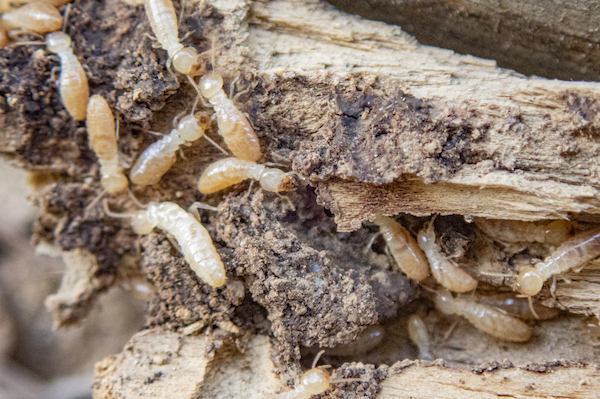
1. You can see active termites
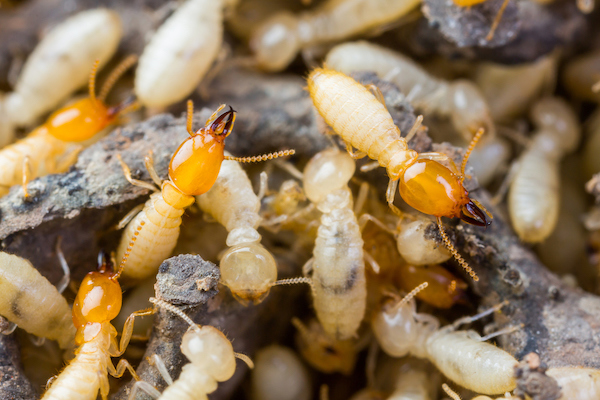
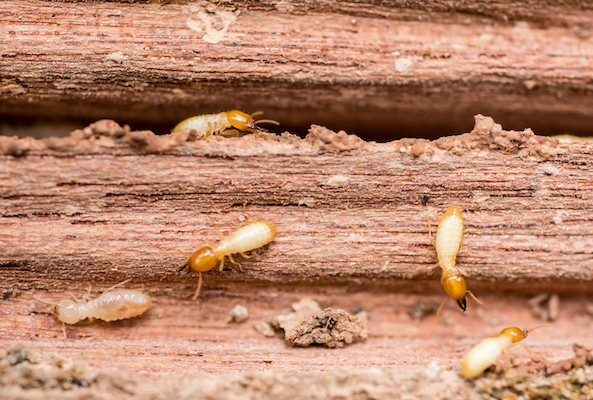
Obviously if you can actually see live active termites you know you have a problem. Here’s a photo of worker termite (“white ant”), which does all the damage.
2. Termite damage
Termites are very good at remaining hidden and so they often remain undetected until significant damage is done. Obviously, wood collapse is quite obvious, but bouncing/spongy floorboards and doors / windows that don’t shut properly could also be a sign that there is termite activity in the structural wood and you should get an inspection.
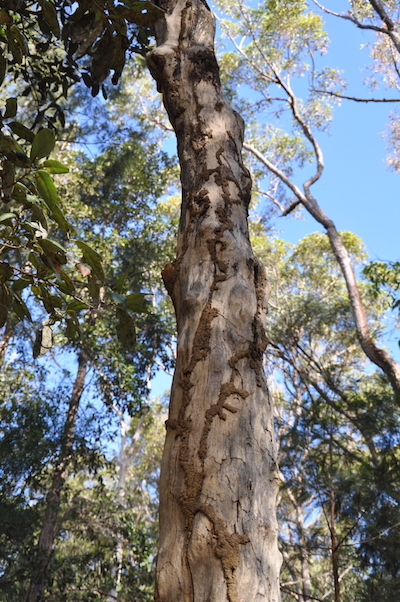
3. Termite mudding / mud tubes
Termite mudding or mud tubes are perhaps the most common sign of termite activity that homeowners will spot. Termites build these structures when they come above ground to protect themselves from predators and drying out. You will often find these mud tubes on trees, fencing and in the sub-floor.
Sometimes you may find spots or areas of mud on the walls of rooms. This happens when the termites accidentally break through the surface material, and they plug the hole with mud.
4. Flying termites / termite wings
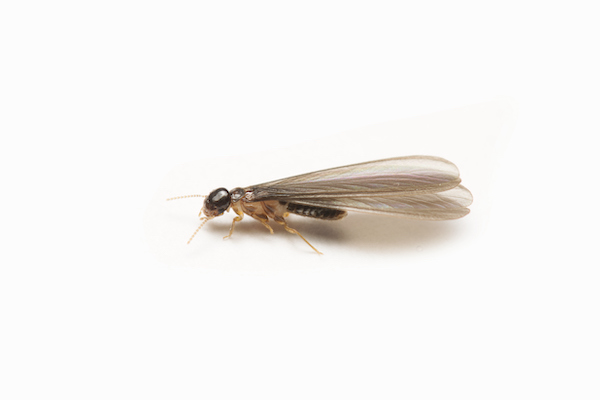
Flying termites (alates) appear in swarms on warm humid nights. These are the mating flights of the new kings and queens. When they fall to the ground their wings drop off and they pair off to start a new nest.
If you have lots of flying termites around your home or find piles of wings on the ground in the morning, it means you have a large nest nearby and you should get a termite inspection immediately.
5. Noises in the walls
You can actually hear termite activity in the walls if it’s a significant infestation. You may hear a slight tapping – this is the headbanging of termites when they communicate – or a scraping noise – this is the termites chewing up pieces of wood! Normally this can only be heard when placing your ear against the wall, but in significant infestations it can be possible to hear on a quiet night.
Call Geelong Pest Control for a Professional Termite Inspection