

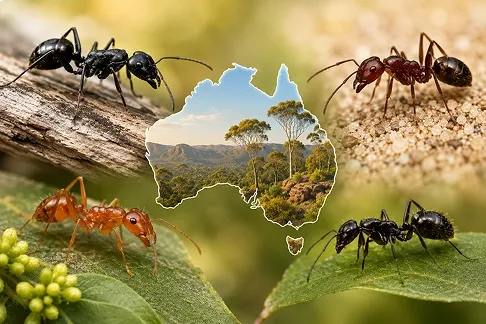
Australia is home to around 1,300 known ant species, but only a small number cause problems in homes and gardens. Knowing which Australian ant species you are dealing with matters because different ants respond to different control methods; a spray that works on one species can scatter another and make the problem worse.
This guide covers the types of ants in Australia most often found in Geelong homes, how to identify them, and when to call in professional ant control support.
Why Does Ant Identification Matter?
Correct identification is the first step in getting rid of ants for good. Each species has its own nesting habits, food preferences and colony structure, and these details decide which approach will actually reach the nest.
For example, some species follow trails back to a single nest that can be baited directly, while others, like Argentine ants, build sprawling networks with multiple queens that re-invade quickly after a surface spray. Misidentify the ant, and you often kill the visible workers while the colony keeps growing out of sight.
What Are the Most Common Types of Ants in Australia?
The most common pest ants in Australia are Argentine ants, black house ants, white-footed house ants, coastal brown ants, carpenter ants, bull ants and jack jumper ants. Here is how to identify each one, with a focus on the species Geelong residents see most.
Argentine Ants
Argentine ants are small, slender ants around 1.6 to 3 mm long, light to dark brown in colour. They are a major invasive pest in Victoria and one of the most common ants in Geelong homes and gardens.
- How to identify them: Long, steady trails of uniform brown ants, often travelling both directions at once. They bite but do not sting.
- Where you find them: Garden beds under mulch, along paths, and indoors around kitchens and moisture. They also “farm” sap-sucking insects like mealybugs, so heavy activity in garden plants is a common sign.
- Why they are a problem: Colonies have multiple queens and interconnected nests, so numbers rebound fast after DIY sprays.
Black House Ants
Black house ants are small, shiny black ants around 2.5 to 3 mm long. They are one of the most frequent indoor invaders across Victoria.
- How to identify them: Glossy black colour, sometimes with a faint green-purple sheen, following well-defined trails to food.
- Where you find them: Kitchens, pantries, bins and pet food bowls. They favour sweet foods but will take meat and grease.
- Why they are a problem: They travel across unhygienic surfaces before walking over benchtops and food, so they can spread bacteria.
White-Footed House Ants
White-footed house ants look similar to black house ants but are slightly larger at around 2.8 to 3.5 mm, with pale, light-coloured feet visible up close.
- How to identify them: Shiny black bodies with lighter legs, often tracking up external walls into the roof space.
- Where you find them: Roof voids, wall cavities and around light fittings. Many homeowners assume they come from outside when the nest is actually inside the roof.
- Why they are a problem: Nests in roof spaces are hard to reach, and only a small share of workers feed on baits, which makes DIY control unreliable.
Coastal Brown Ants (Big-Headed Ants)
Coastal brown ants are tiny ants, around 1.5 to 3 mm, ranging from ginger to dark brown. Their giveaway feature is the soldier caste, which has a noticeably oversized head.
- How to identify them: Small brown ants with occasional big-headed soldiers among them, and piles of excavated soil between pavers or along the edge of paths where concrete meets the house.
- Where you find them: Around paving, slab edges, subfloors and anywhere with reliable moisture. As the name suggests, they thrive in coastal areas, which suits Geelong’s conditions well.
- Why they are a problem: They dig extensively under paths and paving, and large colonies spread across property boundaries.
Carpenter Ants
Carpenter ants are among the larger Australian ant species, ranging from roughly 6 to 12 mm, usually black or reddish-black.
- How to identify them: Large ants are active mainly at night, often near timber. Piles of coarse, sawdust-like material (frass) near skirting boards or window frames point to nesting activity.
- Where you find them: Damp or decaying timber, tree stumps, and moist structural wood.
- Why they are a problem: They excavate timber to nest, and their activity is often confused with termites. Unlike termites, carpenter ants do not eat wood, but any sign of insect activity in structural timber is worth checking with a professional termite inspection to rule out something more serious. A quick check: ants have elbowed antennae and a pinched waist, while termites have straight antennae and a thick waist.
Bull Ants
Bull ants are large native ants, growing up to 40 mm, with big eyes, long mandibles and a venomous sting.
- How to identify them: Their size makes them hard to miss. They are alert, aggressive when disturbed and will defend their nest.
- Where you find them: Bushland edges, gardens and lawns, usually nesting in soil with a small, unobtrusive entrance.
- Why they are a problem: Their sting is very painful and can trigger allergic reactions in sensitive people.
Jack Jumper Ants
Jack jumper ants are 10 to 15 mm long with a black body and orange-brown jaws and legs, known for their jerky, jumping movement.
- How to identify them: Erratic hopping motion when disturbed, and aggressive defence of the nest.
- Where you find them: Open bushland, lawns and gardens across southern Victoria, including the Geelong and Surf Coast region.
- Why they are a problem: Jack jumper stings are a leading cause of ant sting allergy in south-eastern Australia and can cause severe reactions, including anaphylaxis. Nests near homes with children or allergy sufferers should be dealt with professionally.
How to Identify Ants in Australia
| Species | Size | Colour | Tell-Tale Sign |
| Argentine ant | 1.6 to 3 mm | Light to dark brown | Long two-way trails, garden bed activity |
| Black house ant | 2.5 to 3 mm | Shiny black | Trails to kitchen food sources |
| White-footed house ant | 2.8 to 3.5 mm | Black, pale feet | Tracks up walls into the roof void |
| Coastal brown ant | 1.5 to 3 mm | Ginger to brown | Big-headed soldiers, soil between pavers |
| Carpenter ant | 6 to 12 mm | Black or red-black | Night activity, frass near timber |
| Bull ant | Up to 40 mm | Black or red | Very large, aggressive, painful sting |
| Jack jumper ant | 10 to 15 mm | Black with orange jaws | Jumping movement, allergy risk |
When Should You Call a Professional for Ants in Geelong?
Call a professional when ant trails keep returning after cleaning and DIY sprays, when you find ants nesting inside walls or the roof, or when stinging species like bull ants or jack jumpers nest near your home. Persistent activity almost always means an established nest that surface sprays will not reach.
Professional ant control in Geelong starts with identifying the species, then locating the nest and selecting the right combination of non-repellent applications and baits. These professional products work differently from supermarket sprays; foraging ants carry the active ingredient back to the colony, which is how the nest itself is dealt with, rather than just the visible trail.
Geelong Pest Control provides ant management for homes and businesses across the region, including Belmont, Newtown and Highton. Ant services can also be bundled with a general pest control service covering spiders, cockroaches and other crawling insects. Pricing is provided by quote based on your property and the species involved. Call 1300 135 519 to arrange an inspection.
Frequently Asked Questions
How do I identify what type of ant I have?
Look at the ant’s size, colour and behaviour, plus where the activity is concentrated. Trail patterns, nest locations and features like oversized soldier heads or jumping movement all narrow down the species. A photo sent to a pest professional can confirm identification.
What are the most common ants in Geelong?
Argentine ants, black house ants, white-footed house ants and coastal brown ants are the most common pest ants in Geelong homes. Bull ants and jack jumper ants are also found in gardens and bushland areas across the region.
Are jack jumper ants dangerous?
Yes, jack jumper ants can be dangerous for people with sting allergies. Their sting can cause severe allergic reactions, including anaphylaxis, and they are a leading cause of ant sting allergy in south-eastern Australia. Nests near the home should be managed professionally.
Why do ants keep coming back after I spray them?
Supermarket sprays only kill the workers you can see, not the nest. Many species, such as Argentine ants, have multiple queens across connected nests, so numbers recover quickly. Professional baits and non-repellent applications target the colony itself.
How much does ant control cost in Geelong?
The cost depends on the ant species, the size of the problem and your property, so Geelong Pest Control provides pricing by quote. Call 1300 135 519 and the team will assess your situation and give you a tailored price.